What Are Intumescent Fire Coatings?
In the first part of our passive fire protection series, we covered the fundamental principles of fire protection, and in the second part, we examined cementitious fire protection systems. In this final instalment, we look at intumescent fire coatings — one of the most preferred fire protection solutions in modern architecture.
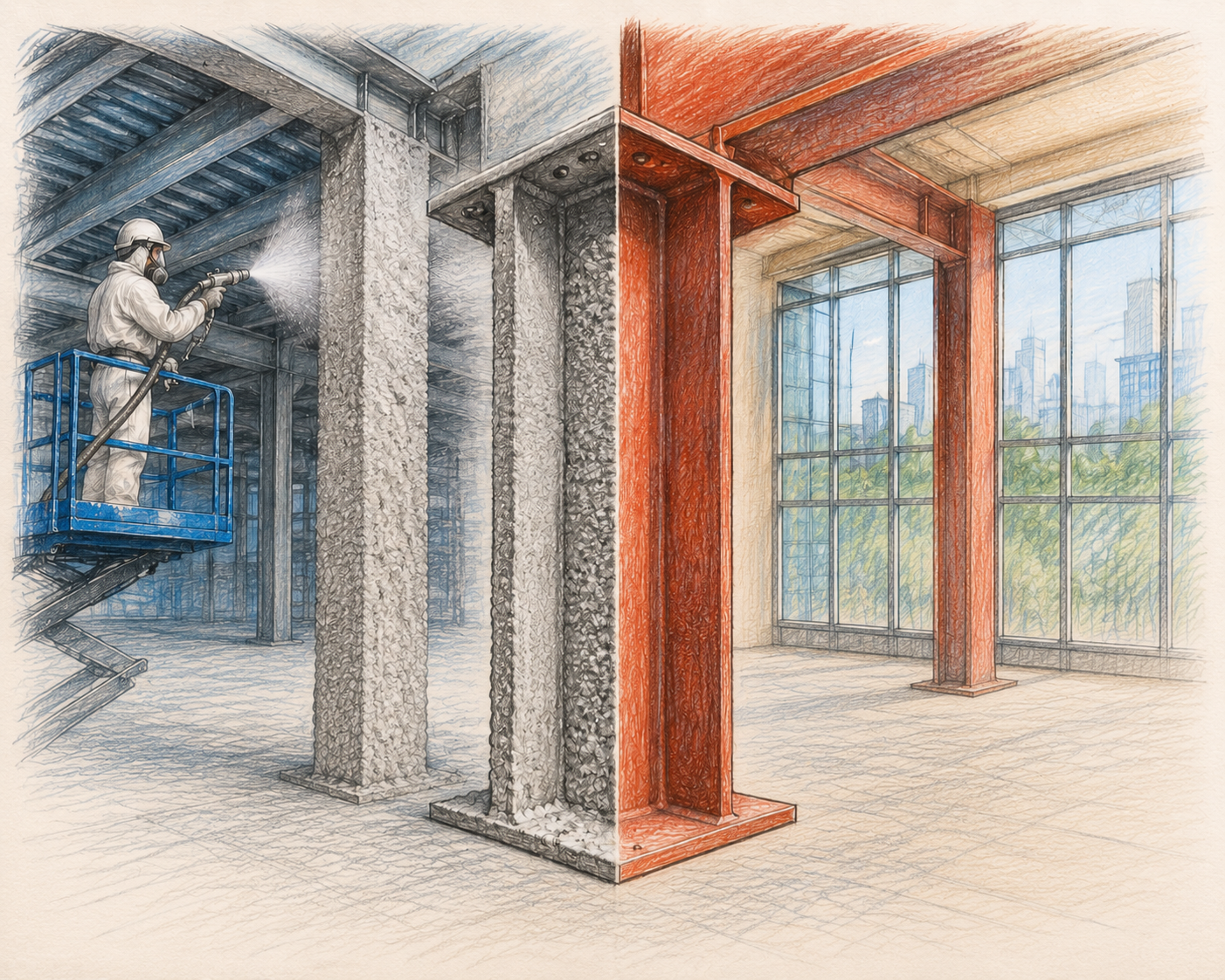
Intumescent coatings are special coating systems developed to preserve the load-bearing capacity of steel structures during a fire. Under normal conditions, these coatings have the appearance of standard paint; when exposed to fire, they undergo a chemical reaction, expanding their volume many times over and forming an insulating carbon layer on the steel surface.
Thanks to these properties, they both preserve architectural aesthetics and provide a high level of fire resistance.
How Do Intumescent Coatings Work?
When the temperature reaches a certain level during a fire, the special components within the coating are activated and the expansion reaction begins. As a result of this reaction, the coating layer can expand to tens — or in some systems even a hundred — times its original thickness. The resulting carbon-based foam-like structure forms a powerful insulation barrier between the steel and the fire, significantly reducing heat transfer. This delays the steel elements from reaching critical temperatures and preserves structural stability for longer.
Types of Intumescent Coatings
Different types of intumescent coating systems may be preferred depending on the intended use and environmental conditions of the project.
Water-Based Intumescent Coatings
Widely used in interior applications. Advantages: low VOC emissions, smoother surface appearance, aesthetic advantage in architectural projects, easy application.
Solvent-Based Intumescent Coatings
Preferred in more demanding site conditions. Advantages: fast drying, more resistant application to humidity and temperature variations, high performance in site conditions.
Epoxy Intumescent Coatings
Developed especially for industrial facilities and external applications. Advantages: mechanical strength, corrosion resistance, suitability for outdoor conditions, use in petrochemical and energy facilities.
Key Considerations in the Design Process
The required coating thickness in intumescent coatings is determined based on the dimensions, shape, orientation and target fire resistance period of the steel profile. These calculations must be based on design tables approved by internationally accredited testing and certification bodies.
Best Practices in the Application Process
Intumescent coating applications require a more sensitive process than standard architectural paints. Critical steps for a successful application: 1. Surface preparation, 2. Primer application, 3. Intumescent coating application at thicknesses specified by the manufacturer, 4. Topcoat application where required.
Use on Exterior Steel Structures
Today, advanced epoxy intumescent systems allow exterior steel structures to be effectively protected. Projects such as airports, stadiums, industrial facilities, petrochemical plants, energy plants and open steel structures can simultaneously meet both aesthetic and fire safety requirements.
Cementitious Systems vs Intumescent Coatings
Both systems offer effective solutions in passive fire protection. Cementitious systems offer more economical solutions and are advantageous for large areas, generally preferred in concealed locations. Intumescent coatings provide an aesthetic appearance, leave architectural steel visible, offer thinner coating thicknesses and are preferred in prestige projects.
Conclusion
Passive fire protection is not just a regulatory requirement — it is a critical investment for the long-term safety of buildings. As Firesol, we provide internationally compliant support across all areas of passive fire protection, from cementitious fire protection systems to intumescent coatings, from fire-stopping applications to special engineering solutions.